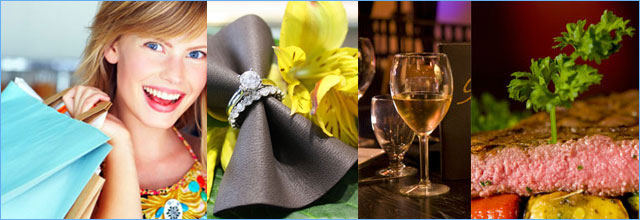
Solano Avenue bridges two beautiful cities, Berkeley and Albany, bringing together the best of what makes each unique, creating an avenue rich in diversity. Solano is blessed with a wonderful combination of mom-and-pop shops, modern boutiques, and an incredible spectrum of restaurants and cafes that serve delicious, fresh food from around the world. Solano Avenue is the home of hundreds of professional services and health-related retail and service organizations.
Spanning 26 blocks long (one mile) Solano Avenue hosts over 400 businesses which include 65 restaurants, 30 retail shops, one movie theater, three "pocket parks", two grocery stores and two elementary schools! Most of our enterprises are independent and locally owned.
Solano became a business district early in Berkeley's history. According to Malcolm Margolin in Berkeley Inside Out, "John Hopkins Spring, a large landowner, developed Thousand Oaks and the shopping district along Solano Avenue shortly after the San Francisco earthquake and fire of 1906." In 1911, the Southern Pacific Railway brought trains in to connect Thousand Oaks in Berkeley with Oakland and the ferry depots and ran tracks the length of Solano Avenue which provided passenger service. In 1912, the Key System's local street car line connected Solano Avenue to downtown Berkeley via The Alameda.
"No one seeks to benefit from natural disasters but the fire and earthquake of 1906 resettled many San Franciscans in Berkeley's burgeoning neighborhoods. Perhaps the first Berkeley activists were the women of Thousand Oaks, armed with two shotguns and a rifle, holding off garbage trucks that rolled down Solano on the way to the Albany Hill [El Cerrito] dumping grounds." There is "enough variety to satisfy every whim so a day can be enjoyed without requiring a car. Wake up on Saturday morning, feed the pets, throw on some clothes and stroll down the street for coffee and pastries or a full breakfast. Dreams become reality on Solano Avenue. It's all a charming, eclectic mixture of ethnic businesses, antiques, used books, coffeehouses and specialty shops perhaps not present on the Kansas plains." (Marta Yamamoto 09.08.2006)
.jpg)